

Why Missiological Archaeology Matters for Missions
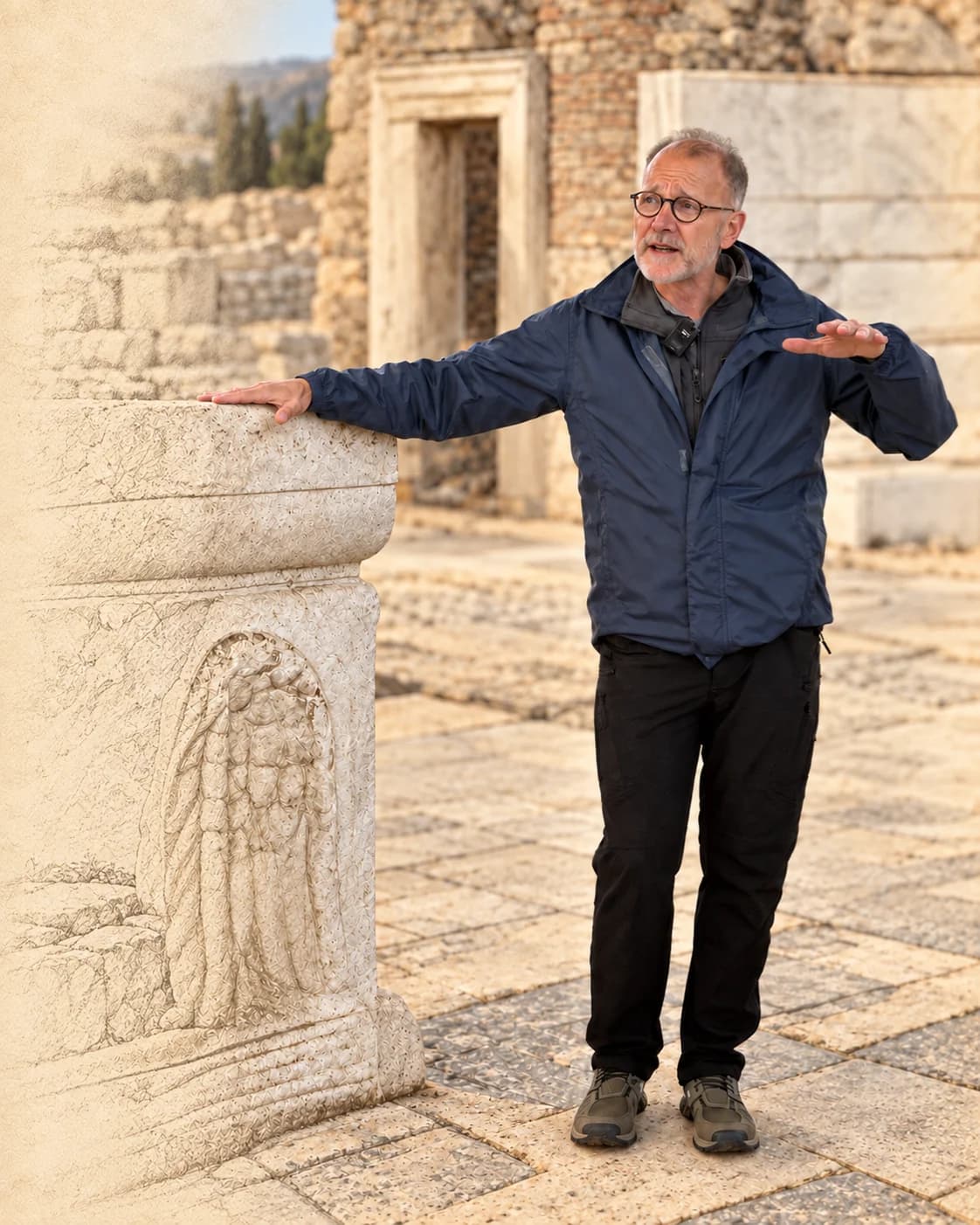
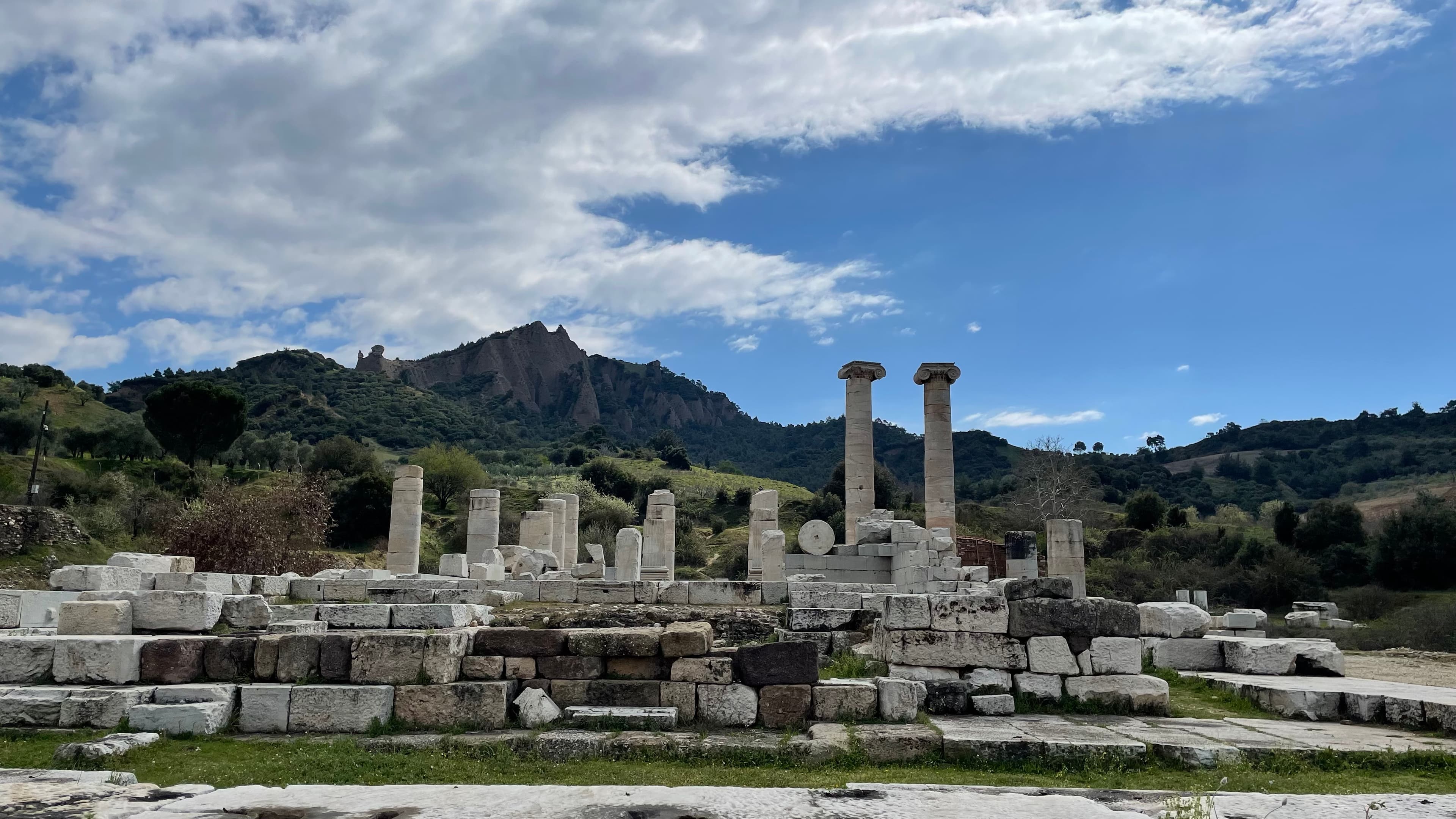
At the Temple of Artemis in Sardis, an eight-spoked Christogram remains carved into the stone near the eastern entrance. The temple once stood as one of the great sacred spaces of the ancient city, where worshipers honored Artemis and participated in the religious life of the Roman world. Yet the symbol on its threshold belongs to a later chapter in the site’s history. Formed from overlapping Greek letters, the Christogram declares Iēsous Christos Theos—“Jesus Christ God.” The people who carved it are gone. Their names may be forgotten, and the Christian community to which they belonged has long since disappeared. But their confession remains. Visitors still walk across that threshold in the twenty-first century, and the stone continues to speak the name of Jesus.
Jesus once said that if his disciples became silent, “the stones will cry out” (Luke 19:40). Archaeological remains do not proclaim the gospel in the same way living witnesses do, but they preserve the memory of those who did. Inscriptions, graffiti, mosaics, houses, tombs, churches, and repurposed temples testify that people in particular places heard the good news, confessed Jesus as Lord, gathered in his name, and reshaped their lives around their allegiance to him. The archaeological record does not preach, but it witnesses. Missiological archaeology listens carefully to that witness and asks what it means for the mission of the church today.
What Is Missiological Archaeology?
Missiological archaeology brings archaeology and missiology into sustained conversation. It examines the material remains of Christian movements to understand how the gospel took root within particular cultures, how believers expressed their faith, how communities negotiated competing loyalties, and how Christian memory endured—or sometimes disappeared. Its purpose is not merely to confirm the accuracy of a biblical place-name or illustrate the background of a New Testament passage. It seeks to discern the movement of God within the material realities of human life and to consider how those discoveries might inform faithful participation in God’s mission today.
This matters because the movement of God always occurs somewhere. Christian movements do not emerge in an abstract spiritual vacuum. They take shape among particular peoples, within existing households, along trade routes, under political authorities, and amid established religious traditions. The earliest followers of Jesus lived in cities crowded with temples, statues, imperial monuments, philosophical schools, commercial associations, and inscriptions honoring gods and emperors. When they confessed Jesus as theos, kyrios, and sōtēr—God, Lord, and Savior—they used words already embedded within the public life of their cities. Archaeology allows us to recover something of that contested environment and to recognize the courage, wisdom, and contextual sensitivity required to proclaim Jesus within it.
Reading the Christian Movement in Stone
The Logos word squares discovered in the cryptoporticos beneath the agora at Smyrna provide one example. Public inscriptions and monuments throughout the city celebrated emperors, civic benefactors, and ancient deities. Yet in the shadowed corridors beneath the basilica style agora, someone carefully inscribed and repeated a square of interlocking Greek words centered on Logos. The precise meaning of the squares remains open to interpretation, but their language and placement suggest reflection upon the divine Logos and perhaps a quiet Christian confession within contested public space. Long after the voice of the person who inscribed the words fell silent, the writing on the wall remains a possible witness to the spread of the name of Jesus in a city saturated with other claims to divine authority.
Similar signs appear across Asia Minor. A staurogram, combining the Greek letters tau and rho into a visual representation of the cross, was carved into the Temple of Apollo at Didyma. Another appears on the steps leading into the Sacred Agora at Priene. Crosses were cut into columns, thresholds, and architectural fragments. Temples dedicated to Serapis, Dionysos, and Apollo were eventually adapted for Christian use, while stones from former temples were incorporated into churches and marked with new symbols of allegiance. At Sardis, the Christogram on the Temple of Artemis and the "synagogue" inscription invoking the Pantokrator—the one who rules over all—preserve the memory of people who publicly identified Jesus as the sovereign Lord.
These remains reveal that the spread of Christianity was not simply the movement of a message from one place to another. It involved the transformation of identity, allegiance, space, and memory. Early Christians inhabited cultural worlds they did not create. They adopted familiar languages and forms, reinterpreted inherited symbols, gathered in existing social spaces, and sometimes transformed buildings previously dedicated to other gods. Archaeology helps us see where Christians demonstrated wise contextualization, where they resisted the dominant culture, and where they may have accommodated it too readily. These are not merely historical questions. Missionaries and local Christian leaders face the same tensions whenever the gospel takes root within a new cultural environment.
Recovering the Memory of Jesus
Missiological archaeology also matters because it can restore a memory of Jesus in places where that memory has become obscured. Across the Middle East, North Africa, and Asia Minor, the contemporary Christian presence is often small, pressured, fragmented, or largely absent. Yet the material record tells us that these places are not strangers to the story of Jesus. The stones preserve the names, prayers, symbols, gathering places, and confessions of communities that worshiped him centuries before the modern religious landscape took shape. Christianity is not merely a recent Western arrival in these regions. It formed part of their local history, sometimes for many generations.
That recovery can encourage present-day believers. A Christian standing before an ancient Christogram, mosaic, or inscription encounters evidence that others confessed Jesus in that place long before them. They are reminded that they do not stand alone and that the history of the church in their land did not begin with a modern missionary organization. The archaeological record reconnects contemporary disciples with an older community of witness and places their faithfulness within a much longer movement of God.
Creating Conversations about Jesus
The same evidence can create meaningful opportunities for engagement with Muslim friends and neighbors. Archaeological sites are shared places of history. They allow conversations about Jesus to begin with objects that both participants can see: a name cut into stone, a cross carved into a threshold, a mosaic dedicating a gathering place to “God Jesus Christ,” or an inscription confessing the Pantokrator. Such conversations need not begin with confrontation. They can begin with curiosity: Who made this? What did these people believe? Why did they name Jesus here? What happened to their community?
Missiological archaeology does not use the past as a weapon. It invites people to encounter historically reliable evidence, ask honest questions, and consider how Jesus was remembered within their own cultural landscape. The goal is not simply to win an argument about history. It is to create space in which people can encounter the historical memory of Jesus and consider the significance of his identity for themselves.
Learning from Both Growth and Disappearance
The stones also offer a necessary warning. Not every archaeological site tells a story of enduring Christian vitality. At Pergamon, for example, the material evidence for a lasting Christian presence is surprisingly faint compared with neighboring cities. The city remembered in Revelation as the place where Antipas remained faithful eventually preserved little visible evidence of a continuing movement. The stones therefore teach us about both growth and disappearance. They force missiologists to ask not only how movements begin, but also how they endure, how they compromise, how they lose their memory, and why a once-visible witness can fade from a city.
For contemporary missions, this may be one of archaeology’s greatest contributions. It anchors our strategies in the complexity of actual human communities. It challenges romanticized accounts of Christian expansion, reminds us that contextualization always involves discernment, and demonstrates that movements leave material and social traces. It helps missionaries read culture more attentively, equips local believers to recover their own Christian histories, and provides tangible points of contact for conversations about Jesus.
Joining the Witness of the Stones
The stones cannot replace the witness of living disciples. They cannot interpret themselves, make disciples, or embody the love of Christ before their neighbors. But they can stand beside the church as witnesses. They can remind us that the gospel has crossed these streets before, that believers have confessed Jesus under other empires and amid other gods, and that the movement of God has always taken material form in real places.
In the twenty-first century, cities may forget, communities may disappear, and religious landscapes may change. Yet beneath later buildings, along ancient roads, and on the thresholds of abandoned temples, the memory of Jesus remains. The stones continue to speak. Missiological archaeology teaches the church how to listen—and how to join their ancient witness with a faithful, embodied witness today.