

Can We Explain a Movement Without Explaining Away the Spirit?
When a religious movement begins to grow, two kinds of questions quickly emerge. The sociologist asks: What relationships carried the movement? What identity did it offer? What social conditions made people receptive? How were beliefs and practices communicated, embodied, and reproduced? The theologian asks a different set of questions: What was God doing? How did revelation, calling, conversion, and the work of the Spirit give rise to a people who did not exist before?
These questions are sometimes treated as competitors. If a movement can be described sociologically, some assume that its spiritual claims have been explained away. Others respond by resisting sociological analysis altogether, as though attention to networks, leadership, culture, and collective behavior demonstrated a lack of faith. Both reactions are inadequate. Sociology and theology attend to different dimensions of the same human reality. Sociology helps us observe the social forms through which religious life takes shape. Theology helps us discern the divine initiative to which Christian faith bears witness.
We do not honor the Spirit by refusing to observe carefully. Neither do we honor careful observation by deciding in advance that the Spirit cannot be acting.
What I Learned by Studying the Druids
My sustained interest in religious movements began with the historical and ethnographic research that became Contemporary Druidry. I entered that research as a committed Christian, but I also entered as a scholar determined to listen. I attended rituals, visited sacred sites, interviewed practitioners, studied organizations, examined historical claims, and asked contemporary Druids to explain their beliefs and experiences in their own terms. The task was neither to convert them nor to reduce their spiritual lives to impersonal social forces. It was to understand how a religious movement emerged and how its participants understood themselves.
The study showed that contemporary Druidry could not be understood merely as the survival of an ancient religion. The available historical evidence does not establish an unbroken continuity between the ancient Druids and contemporary Druid orders. Modern practitioners instead draw upon what can be known—or sometimes imagined—about the past to construct a meaningful religious life in the present. I called this process ancientization: the retrieval and reworking of ancient beliefs, symbols, stories, sites, and practices to create a contemporary religious expression.
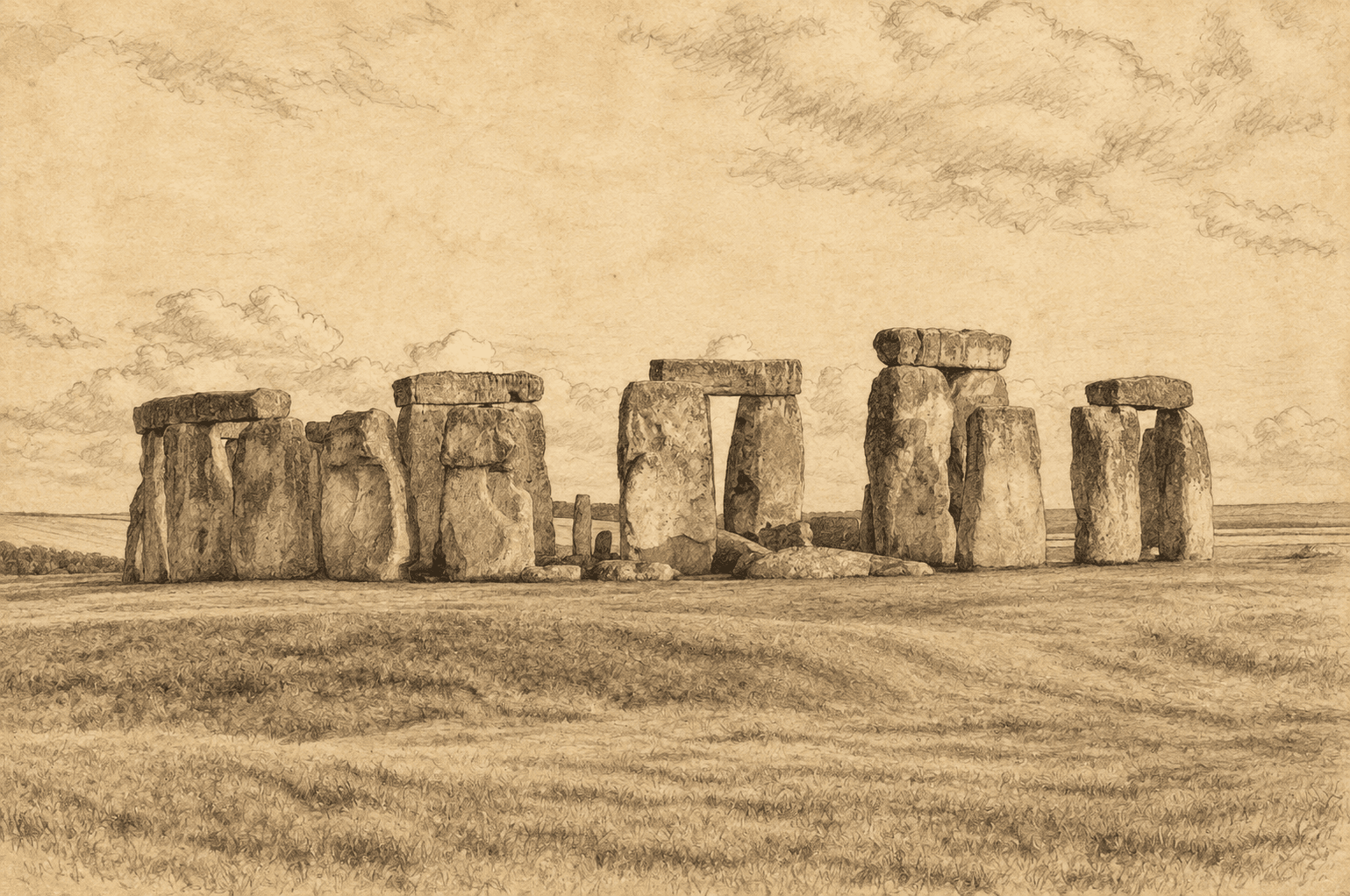
Ancientization is an act of religious innovation, even when participants understand it as recovery. A movement receives material from the past, interprets it through present concerns, and gives it new social form. Druidry therefore includes both reconstructionist and revivalist tendencies. Archaeology, folklore, historical texts, ecological concern, personal experience, and modern forms of communication combine to shape a living religious identity. Sacred sites such as Stonehenge provide a visible connection with the past, while orders, groves, courses, publications, rituals, festivals, and digital networks socialize people into present communities.
This led me to understand religious identity as an integration of intellectual, experiential, and behavioral dimensions. People are drawn toward an account of reality that makes sense to them; they encounter experiences interpreted as spiritually meaningful; and they adopt practices that embody their developing identity. These dimensions reinforce one another. Beliefs interpret experiences, experiences make beliefs plausible, and practices embed both within the person and community.
I also described this process in terms of religious satisfaction and deprivation. People may experience an intellectual, relational, experiential, or spiritual lack—whether inherent or perceived—and encounter a religious pathway that appears to address it. This does not mean that religious commitment is nothing more than compensation for deprivation. It means that movements become socially compelling when their stories, communities, and practices speak to questions people already carry. Sociology can identify those pathways without judging whether every spiritual claim made along them is true or false.
What Sociology Can See
Sociology gives us a disciplined way to examine the observable life of a movement. It can map relational networks, trace the diffusion of ideas and practices, study the construction of collective identity, examine the influence of leaders, and identify the cultural conditions in which a movement gains or loses plausibility. It can ask why some practices are readily transmitted, why some communities generate strong belonging, why certain narratives mobilize participation, and why movements sometimes divide, institutionalize, or disappear.
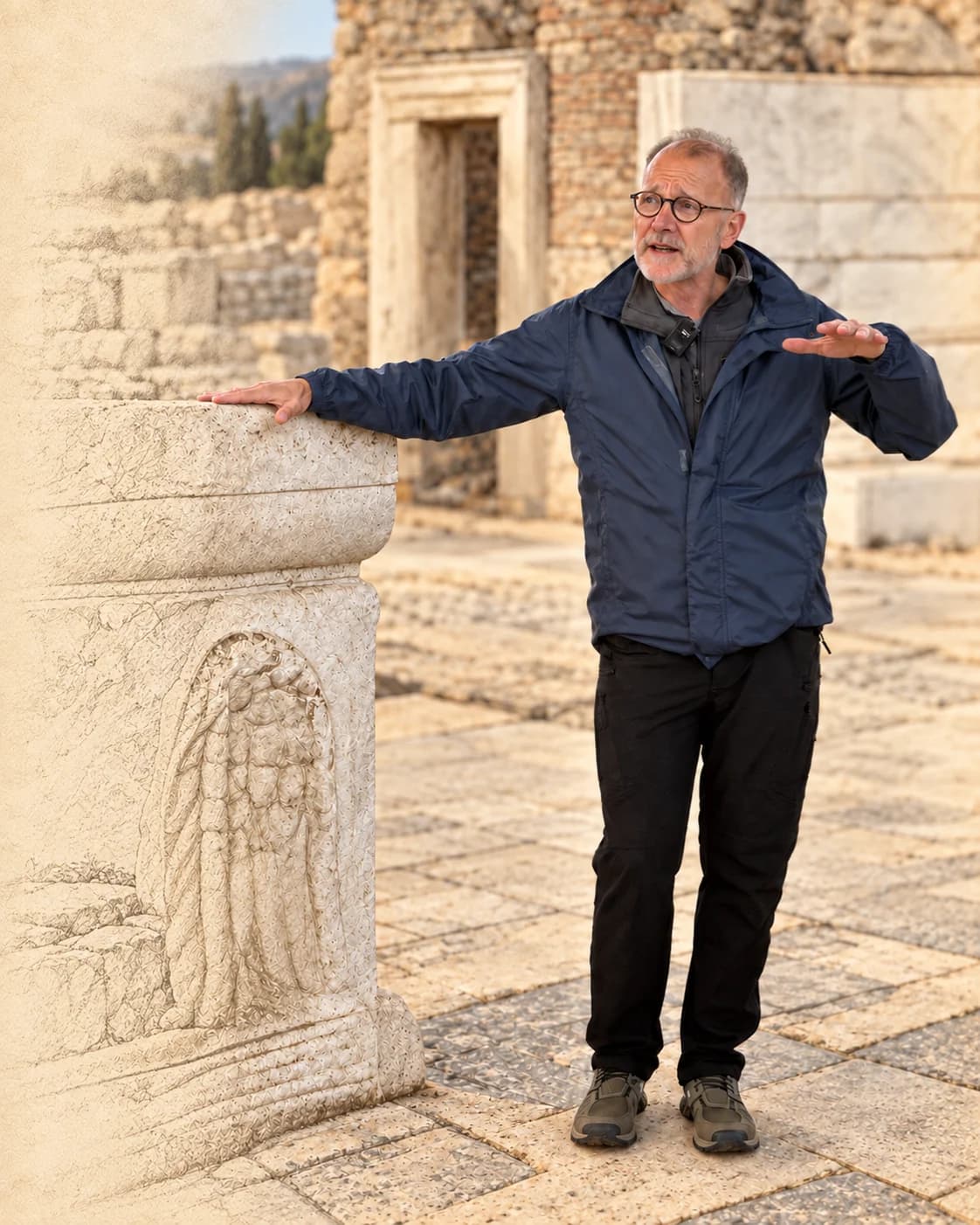
This kind of analysis was essential to my study of contemporary Druidry, and it became foundational for Ephesiology. The early Christian movement also possessed a shared story, a recognizable identity, formative practices, relational networks, mobile leaders, local communities, and adaptable social forms. Paul’s ministry in Ephesus did not spread throughout Asia because an abstract message floated from city to city. It moved through people: disciples formed in the hall of Tyrannus, co-laborers traveling along established routes, artisans and merchants connecting households, and local leaders embodying the gospel in culturally intelligible ways.
Sociology helps us see that Luke’s statement that “all the residents of Asia heard the word of the Lord” (Acts 19:10) describes a relational process. Paul did not personally address every resident of the province. The word spread through a network that exceeded the reach of its most prominent apostle. To recognize that network does not diminish the work of the Spirit. It identifies the human relationships through which the Spirit’s work became socially visible.
What Sociology Cannot Decide
The danger arises when a useful sociological description becomes a total explanation. Sociology may legitimately bracket theological claims in order to study what can be observed. It can examine accounts of conversion as narratives, religious experiences as interpreted experiences, and communities as social formations. The methodological bracket becomes reductionistic, however, when it is transformed into an ontological conclusion: because social processes can be observed, divine agency is unnecessary or unreal.
That conclusion does not arise from the data. It arises from a prior philosophical commitment about what kinds of causes are permitted to exist. A network can explain how a testimony traveled without explaining why it brought conviction. A compelling identity can help explain why people belonged without exhausting the reality of their transformation. Charismatic or distributed leadership can help explain mobilization without determining whether anyone was called by God. Collective behavior can describe what a crowd did without discerning the spiritual character of the event.
Theology attends to questions sociology is not equipped to adjudicate. Christian theology confesses that mission originates in the perichoretic life of the Triune God. God speaks, sends, reveals, calls, transforms, and draws people into participation in divine life. The Spirit is not a religious label placed upon successful social organization. The Spirit precedes the church, creates communion, gives gifts, convicts, empowers witness, and forms people into the likeness of Christ.
Paul maintained this distinction without separating divine and human action. “I planted, Apollos watered, but God gave the growth” (1 Cor 3:6). Planting and watering are observable activities. We can examine who planted, how Apollos taught, which relationships connected the workers, and what social conditions helped the message spread. Yet Paul refuses to identify those activities as the source of life. Human participation is real and consequential, but growth remains the work of God.
The Opposite Error: Spirituality Without Observation
Sociological reductionism is not the only danger. Christians can speak about the Spirit in ways that protect ministry practices from examination. “God is moving” can become a substitute for asking whether people are actually being formed into Christlikeness, whether leaders are manipulating followers, whether reported growth is credible, or whether a movement is merely transferring Christians from one organization to another.
In Mind the Gap, I warn against romanticizing the early Christian movement or extracting a universal method from one of its forms. The early Christians adapted households, workshops, schools, travel routes, and existing relationships for the life of the ekklēsia. Their forms mattered, but no single form caused the movement. In the same way, contemporary claims of rapid multiplication must be examined rather than sanctified by movemental language. The Spirit’s work does not make careful historical, cultural, or empirical inquiry unnecessary. It makes truthful inquiry a matter of Christian integrity.
A spirituality that refuses observation can also fail to learn. It may repeat ineffective practices while blaming a resistant culture, celebrate numerical activity without assessing maturity, or preserve leadership structures that prevent the body from participating. Discernment requires more than enthusiasm. It requires attention to what is actually happening among particular people in particular places.
A Missiological Way of Seeing
In Missiological Theology, I describe a spirituality that moves through curiosity, discovery, reflection, wonder, and participation. That rhythm offers a way to hold sociological and theological attention together. Curiosity asks what is happening without rushing to defend a method. Discovery listens to people, studies their context, traces relationships, and examines practices. Reflection brings those observations into conversation with Scripture, theology, history, and the interpreting community. Wonder recognizes that the movement of God cannot be contained by our analysis. Participation joins what God is doing with humility and faithfulness.
For practitioners, this means asking both sets of questions. What relationships are carrying the gospel, and where does the Spirit appear to be opening new relationships? What shared identity is forming, and is that identity centered in Christ? Which practices are being transmitted, and are they producing mature disciples? Who is exercising influence, and does that leadership release the gifts of the body? What cultural conditions make people receptive, and how is God already speaking and acting within that context? What is multiplying, and does its fruit bear the character of Jesus?
These questions neither confuse sociology with theology nor divide reality into unrelated spheres. They acknowledge that human beings are simultaneously social and spiritual, embodied and relational, culturally situated and answerable to God. Religious movements occur through historical people, material practices, social networks, and interpreted experiences. Christian movements also bear witness to revelation, calling, transformation, and the living activity of the Spirit.
We can therefore explain much about a movement without explaining away the Spirit. Indeed, careful explanation may help us recognize how the Spirit ordinarily works through people, relationships, cultures, and communities. But our explanations must remain humble. Sociology can describe the planting and watering. Theology reminds us to look beyond them for the giver of life.